Three other occasions to give her a diamond eternity ring

Many men think that wedding ceremonies are the only occasions when they can present their partner with a diamond eternity band. They would be partly correct in thinking this because the eternity bands have symbolic ties to marriage. However, there are at least three other occasions when this type of band would be the perfect gift.

Anniversaries are often the most important occasions for giving diamonds because they mark milestones in a couple’s marriage. When you tell your friends that your anniversary is coming up, they often ask how many years you celebrate. This is because anniversaries are like notches that are carved to celebrate the years together. Getting her an eternity diamond band this time reaffirms her commitment to marriage. This is best done on important anniversaries like your 5th anniversary or 10th anniversary. These magic numbers impart the feeling of closing the circle. Even if she already has an eternity diamond band, you can always get her a bigger one for her anniversary.

Diamond Eternity Band and Ring in 18k white gold

Although we associate Christmas with the purchase of toys for children, it is still a great occasion to give her an eternity band of diamond eternity bands. Why Christmas? You can ask. Think of it this way. She is so busy shopping for everyone who received a gift like this it would be quite an unexpected surprise. You can take advantage of this by getting the most impact out of being creative with the gift giving ceremony.

You can slide the ring into her eggnog glass on Christmas night. Even though everyone is excited for the kids to open their presents the next morning, they could both have something else between them that adds another layer of celebration to the Christmas holidays. Also at Christmas, vacation time is available so you can enjoy the importance of the gift for the few days after work.

The other occasion that will present itself as a good diamond ring gift would be your birthday. You can forgo the party for a quiet night together and gift her a high fashion diamond eternity band that is totally different from her wedding band. It is a gift that marks your own journey and lets you know that you are also interested in your private journey through life.

The opportunity to turn the diamond engagement band into a fashionable piece on this day is great. With a little imagination, you can find all kinds of innovative designs and styles that will help her with all the effort you put into creating a piece especially for her. For example, you can customize it to make a diamond band in gold with alternate white and pink diamonds. Or you can create a clearly fashionable piece in black and silver with champagne diamonds. You could never run out of ideas for new ways to make an eternity band. It is also important to note that this is a gift that keeps on giving.
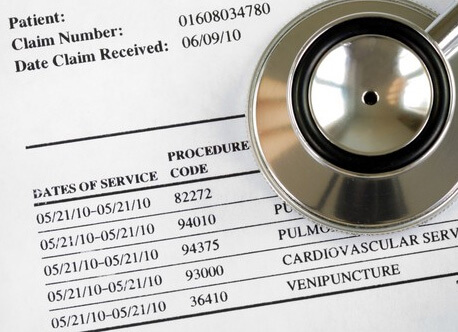

How Medical Billing Management Services Benefit Healthcare Practices

Health care practices must carry out their medical billing tasks efficiently to obtain prompt and timely payment. Professional medical billing management services are very helpful when it comes to filing accurate claims and ensuring better cash flow. Additionally, honest and accurate billing is a priority for virtually all healthcare provider organizations.

A medical billing company can provide a complete range of professional medical billing solutions.

The service provider handles enrollment in the billing system by entering the patient’s demographic information and insurance details.
Insurance information is verified to ensure that the patient is a member of the plan and has adequate coverage. The benefits and scope of covered services are discussed. The payer may be asked for details such as eligibility dates, pre-authorization requirements, deductibles, copays, etc. The availability of secondary coverage can also be examined. Authorizations are also verified in the diagnostic and CPT codes that describe the procedures.
Accurate coding services are provided for all medical specialties. Professional coders ensure that the correct codes are used for diagnosis and treatment. Inaccurate coding is one of the main reasons for rejecting claims. Specialists are responsible for avoiding updating: the use of a billing code that guarantees a higher rate of payment than that of the service provided. Coding errors can lead to doctors being accused of fraud. Coding services offered would include:
Hospital / Hospitalization Coding
Evaluation of the electronic code of the emergency room
Medical Coding Audits
Cumulative encoding resolution services
DRG / ICD-9-CM encoding validations
CPT medical coding
ASC – Coding of ambulatory surgical centers
ICD-9 encoding based on AMA and CMS guidelines
Other important services included in the medical billing and management services package are billing and reconciliation of accounts and the collection of accounts receivable. The experts that the medical billing company has on their team track unpaid claims and do their best to maximize the collection of payments from insurers and patients.

Advantages of partnering with the right medical bill review company

Health care practices should always be careful to partner with a HIPAA compliant company. This would ensure the security of sensitive patient information in accordance with federal regulations. All records would be kept in electronic format. Other important things to look for

Quick response time solutions
An exclusive manager in each client project.
Periodic reports and analyzes.
Regular quality control checks for all processes
System-based eligibility check
Claims filtering system
Quarterly Coding Updates
No long-term annual contracts
Medical billing management service providers help to file claims without error and keep track of past payments to ensure that health care practices benefit from higher incomes. Assigning these tasks to a competent company also enables physicians to reduce overhead and free up valuable time for patient care.

Find the right invoice review services for your needs

Medical bill review services are complex, multi-tiered services that require a wide variety of services to meet the variety of complex needs of those seeking bill review services. When considering a service provider, consider these areas to ensure you get the most comprehensive services for your needs.

Review of the fee schedule

All providers of medical bill review services must evaluate the fee schedules when providing services. Reviewing the fee schedule ensures that the bill being reviewed is for services actually rendered by the caregiver and that none of the billed services are billed incorrectly. The most common services are billed a specific amount. Having a reviewer review the rate schedules can ensure accurate billing for services.

Reasonable and habitual review

Your insurance provider will establish what it considers “reasonable and customary rates”. These rates, although similar to the rate schedule, are different. With a reasonable and customary review, the accuracy of these rates will be reviewed to ensure that care providers receive adequate payment, while determining the most accurate rate for those who received services. This review serves as a check for both parties involved and ensures that both parties are properly billed and paid. If your invoice review provider does not provide a reasonable and customary fee review, some fees may be incorrectly injury case management.

Quality control checks

It is not uncommon for simple mistakes to be made in medical billing. Although there are often systems to prevent inaccuracies, there is still a level of potential error. With a quality reviewer, the entire billing process will be analyzed for errors or inaccuracies to ensure the most complete and accurate billing possible. It is important to ensure that care providers, insurance providers, and patients are considered equally and exactly. Quality controls should be part of any review process.

User-defined reports

One of the most neglected areas of medical bill review is the reports involved. Often the reports are dictated by the reviewers and only provide the information they consider relevant. It is important to find a managed care provider who develops reports to meet your needs, as well as meet state standards. If you’re settling for reports that just don’t meet your needs, there are providers who provide user-defined reports and can find a system that meets your needs. Having flexibility and accuracy in reporting should be a priority for anyone using a medical bill review specialist. Make sure you get the information you need and deserve from your service providers.

5 signs you may need a medical billing

  1. Have you rejected the claims you want the insurance company to reconsider? Still unsure how to appeal claims?
  2. Are you or a family member chronically ill and overwhelmed with filing a large number of insurance bills and documents?
  3. Do you have older parents who need help with their Medicare Supplement and Part D coverage decisions, and don’t know how to help them?
  4. Have you recently incurred large medical expenses and do not have insurance and do not know where to go or what to do?
  5. Do you suspect that your medical bill review contain surcharges and inaccuracies but don’t know what to do?

If you answered yes to any of these questions, it is recommended to consult with a medical billing advocate. Medical Billing Advocacy of the Rockies provides a free initial consultation to review the facts of your individual situation and determine if you have a case and / or determine what assistance or recommendations they can provide you.

“After spending 10 years in the health insurance field working for a major health insurance company, I saw a critical need for this service. Learning and analyzing jargon and healthcare codes is not something that the population in You generally can’t do it, and you don’t have time to do it. Rocky Mountain Medical Billing Advocacy located in Loveland, Colorado.

According to Ms. Knapp, some of the common questions from her clients are:

“How can I know if my medical bills are correct?

“How do I know if my insurance company has paid as much as it should?”

“How do I know I am paying what I really owe?”

The job of a medical billing advocate is to sort out the facts, review detailed doctor and hospital bills, insurance benefit statements, and medical records. “This comprehensive review helps you get fair treatment in a complex and confusing health care system and assures you of a true and accurate bill,” according to Ms. Knapp. Ms. Knapp advocates on behalf of her clients to get the benefits they deserve, while solving billing errors, eliminating surcharges, and negotiating bill reductions.

Advocates for medical billing are experienced in helping individuals and / or families with chronic illnesses who care for a child or spouse with chronic illnesses. According to Ms. Knapp, “When families face significant health problems, the burden of fighting with insurance companies and health care providers to make sure the bills are correct and that the insurance company processes them properly it’s just another stress they don’t need to deal with at a very difficult time in their lives. A billing advocate can step in to manage the process and allow you to focus on caring for your loved ones. “

Also, for seniors who are confused by the complexity of Medicare supplement policies and Medicare Part D drug plans, medical billing advocates who specialize in this area can provide enrollment advice and assistance. in a plan that will provide the most benefit at the least cost.

A recent article published by CBS News, Slash Your Medical Bill; 7 Ways to Haggle offers advice to consumers on how to find medical pricing data for planned medical procedures, and then use this information to effectively negotiate with care providers before receiving services. They also offer advice on the best methods to reduce bills for medical services you have already received. A skilled consumer, armed with accurate medical price data, can negotiate on his own behalf for substantial savings in medical costs from both doctors and hospitals.

Holly Knapp is a member of a national organization for medical billing advocates: Medical Billing Advocates of America (MBAA). Advocates come from a variety of backgrounds: health insurers, nurses, attorneys, certified medical coders, and healthcare administrators. Members support each other in their common goal of a fair and true medical bill, sharing knowledge and skills while working together on difficult cases.

Medical Bill Help – Carefully Review Your Medical Bills

No one really reviews medical bills and even if families do, it is not enough. The United States Government Accountability Office says that 9 out of 10 hospital bills have erroneous data. If that is true (and there is no reason to believe it is not), then the margin for error is too large. It is difficult to suggest malice on the part of hospitals, but whatever the intention, inefficiency in the system is cause for alarm. The family still has a responsibility to take the time to review their documents and seek medical help from bills immediately after finding a misplaced entrance.

The EOB (explanation of benefits) mailed to you by your insurance company doesn’t say much, so you should request a itemized, itemized bill. That way, you can keep track of all procedures, lab tests, medications, nurses and room rates, or any syringes that have been hit. Viewing all entries will determine if there were redundant or erroneous posts. injury case management

Once you find an error, request a copy of the hospital billing department’s accounting book or medical history to make sure the hospital has actually followed what your doctor ordered. You can actually seek help with medical bills from your insurance provider, who is too willing to review your records. Your healthcare manager is also interested in reviewing your medical bill to prevent your company from overpaying the hospital.

You should also review the manual to find out your insurance coverage. Check the EOB statement with your health policy and make sure all “covered” procedures are paid for.

It is helpful to request a conference call with your billing department and the hospital billing department so that everyone can work together to discuss each item in the document.

If you think you can’t do it alone, seek medical help from a professional. There are people who are responsible for reviewing hospital bills. They can crack all the codes on the invoice and determine the accuracy of the invoice. With statistics stacked against him, it’s too much to expect him to be one of 10 that the hospital bills correctly.

Hurst Texas M. Baylor grew up with both parents as doctors. Health care laws governed her fascination as she grew older. As a paralegal at Allmand & Lee, Marcus maintains an informative blog about medical bill debts, medical litigation, and the latest in health reform bills and government programs.

Medical Bill Help – Carefully Review Your Medical Bills

No one really reviews medical bills and even if families do, it is not enough. The United States Government Accountability Office says that 9 out of 10 hospital bills have erroneous data. If that is true (and there is no reason to believe it is not), then the margin for error is too large. It is difficult to suggest malice on the part of hospitals, but whatever the intention, inefficiency in the system is cause for alarm. The family still has a responsibility to take the time to review their documents and seek medical help from bills immediately after finding a misplaced entrance.

The EOB (explanation of benefits) mailed to you by your insurance company doesn’t say much, so you should request a itemized, itemized bill. That way, you can keep track of all procedures, lab tests, medications, nurses and room rates, or any syringes that have been hit. Viewing all entries will determine if there were redundant or erroneous posts.

Once you find an error, request a copy of the hospital billing department’s accounting book or medical history to make sure the hospital has actually followed what your doctor ordered. You can actually seek help with medical bills from your insurance provider, who is too willing to review your records. Your healthcare manager is also interested in reviewing your medical bill to prevent your company from overpaying the hospital.

You should also review the manual to find out your insurance coverage. Check the EOB statement with your health policy and make sure all “covered” procedures are paid for. medical bill review

It is helpful to request a conference call with your billing department and the hospital billing department so that everyone can work together to discuss each item in the document.

If you think you can’t do it alone, seek medical help from a professional. There are people who are responsible for reviewing hospital bills. They can crack all the codes on the invoice and determine the accuracy of the invoice. With statistics stacked against him, it’s too much to expect him to be one of 10 that the hospital bills correctly.

Hurst Texas M. Baylor grew up with both parents as doctors. Health care laws governed her fascination as she grew older. As a paralegal at Allmand & Lee, Marcus maintains an informative blog about medical bill debts, medical litigation, and the latest in health reform bills and government programs.

Reduce medical debt by finding common medical billing mistakes

Day by day the cost of living continues to rise. Similarly, the cost of medical care is also increasing. High medical costs, along with underinsured or uninsured patients, are a major factor in high medical bills. However, there are many common billing mistakes to look for to reduce medical debt. Below we discuss some common mistakes on medical bills.

You should receive and review your bills carefully for medical bill errors. It is essential that you know what to look for in terms of errors on medical bills. First, you need to collect all the medical bills, prescription drug bills, and request itemized bills for each. You should review the records and itemized invoices. This will help you identify tax charges, if applicable. The records will inform you of the details of all the services that were performed for you. So if the number of tests, services or procedures present on the invoice is greater than the number of tests present in your records, then there is an error. In such a situation, you should contact your doctor or hospital billing department and, in many cases, your health insurance medical bill review

Another type of medical bill error arises due to duplicate bills. In this case, the same amount will be billed twice. Therefore, you should verify the invoice after receiving it. Furthermore, hospital authorities are not allowed to bill for the time when services were improperly provided or not provided at all. Therefore, if you are charged for services you never received or did not receive as planned, you must notify the hospital authorities. Billing should be done only for those tests, procedures, etc. that were carried out successfully.

Phantom charges are another medical bill error. Dishonest healthcare providers will bill the patient or their health insurance for expensive treatments, tests, or equipment that they never received. Sometimes your insurance company will inform you that a hospital or clinic is covered, but the doctor who works that day may not be in the plan, and therefore your insurance may deny payment, which is considered a mistake in name of your insurance company.

Errors can also occur due to human error where billing staff incorrectly expresses services and charges or even forgets to bill their insurance company. Often times, the latter is the case, so always make sure that insurance payments apply when you get a doctor.

Is my personal injury case worth pursuing?

If you are injured in some type of accident, be it a car accident or other accidental injury, you must decide whether it is worth pursuing your case as a legal matter. Of course, this decision should only be made after consultation with a personal injury attorney. After your consultation, the decision to continue with the claim will depend on the answer to a question: Is it worth it? There are three main factors that will influence your decision to proceed with your claim. Those factors are: (1) the probability of showing responsibility; (2) The severity of the injury; and (3) The level of difficulty of the case.

Negligence and legal responsibility. In each accident and injury case, you must be able to demonstrate that some other person or entity is legally responsible for the incident. By proving legal liability, you must be able to show that someone else was “negligent.” Neglect means not using reasonable care. For example, if you stop at a red light and are suddenly hit by another vehicle, you may have a strong claim that the other driver was negligent for not paying attention. On the other hand, if you were hit from the rear because the other driver’s brakes failed, then you might have a harder time showing that the other driver was negligent in causing the car accident. Another example would be a local liability case. For example, if you slip and fall on the water of a newly mopped floor on a supermarket island, then you should be able to demonstrate that the store was negligent in causing your fall, especially if there were no warning signs. On the other hand, if you slipped in the water that a customer recently spilled, you may have a harder time proving that the store’s management was negligent. As you can see, proving negligence against the other party depends on all the facts and circumstances surrounding any particular incident.

Injury and damage. The amount that any party can collect in a given case depends on the injury or damage resulting from the accident. If you are involved in a car accident but were not injured then you would not have a claim. At the same time, injuries can range from relatively minor at one extreme, to very serious injuries, even with permanent disability or wrongful death. Of course, the more serious the injury, the more likely the claim will bring higher compensation for monetary damages. Also, when an accident results in a wrongful death, the amount of recovery can be quite considerable, especially if the deceased left a spouse and dependent children. medical bill negotiation

Difficulty of the case. Not all cases are easy to win. Legal cases are very challenging and require extensive preparation, especially if a lawsuit is to be filed or if the case goes to trial. Although a rear-end car accident may be easy to win, a car accident at an intersection may be more difficult to win, especially when drivers claim they have the right-of-way. Furthermore, the lack of eyewitnesses can also increase the difficulty of the case, as the case would now depend solely on the credibility of each side’s version of events.

So how do these factors play into the decision to pursue a case? Although a case may be clear on the issue of negligence, there may not be a very serious injury, such as a light whip, cut, or bruise. At the same time, the case could be relatively easy to prepare for a possible settlement, so it is worth pursuing. Furthermore, there may also be a case where demonstrating negligence could be challenging, but the accident resulted in very serious injury or even wrongful death. Although this case may have a higher difficulty factor, the potential for a higher recovery may make the case worth pursuing. Generally speaking, a person may have difficulty finding an attorney where the probability of proving negligence is small, injuries are relatively minor, and the case requires a considerable amount of time and effort to establish.

The Top Seven Types of Personal Injury Cases

In my many years as a personal injury attorney in Dallas, Texas, I have always encountered common mistakes clients (and even attorneys) make in handling personal injury cases. These errors can significantly affect the chances of the case obtaining a favorable agreement, or even causing the client to recover absolutely nothing. Therefore, I have compiled this summary of the 10 most common problems to avoid. They are not listed in any particular order, as each is as important as the other.

  1. Represent yourself. Many people think that practicing law is as easy as standing up in court and arguing. That is the furthest thing from reality. The practice of law, in particular personal injury law, requires in-depth knowledge and experience with legal doctrines, contracts and insurance regulations, as well as courtroom procedures. Without this knowledge, a person cannot properly plan and structure their case for proper management, leaving open the likelihood that they will do or say something that will sink their injury claim. medical bill negotiation
  2. Delayed medical treatment. This is very simple … If you are injured, then you should receive immediate medical treatment. Ultimately, a jury can determine whether or not you were injured in an accident. Similarly, the delay in seeking medical treatment tends to undermine your injury claim. Go to the emergency room if necessary, or make an appointment with your family doctor. Remember, if your injury is not serious enough to see a doctor, then it probably will not be considered serious enough to collect on your injury claim.
  1. Delay in obtaining legal advice. The first days of an accident are the most crucial. Whether it’s a car accident, a slip and a fall, or another accidental injury, you’re likely to be bombarded by calls from the insurance adjuster and investigators. It is at this point that many people often say or do something wrong. Your best bet is to call a personal injury attorney right away and have the attorney handle all of these matters. Then you can focus on putting your affairs in order.
  2. Give written statements or recorded interviews. One of the first things insurance adjusters do when reporting a claim is to get recorded statements from drivers and injured plaintiffs. When I started practicing personal injury law in Dallas, this was a very common and accepted practice. I quickly realized that adjusters were using these recorded statements and written reports against my clients as the claim progressed. Similarly, I stopped allowing my client to make written or recorded statements. Even in a slip and fall case, you may be asked to complete a report or even sign the report after it has been written by the store manager. Do not give any type of recorded or recorded statement or sign anything before talking to an attorney or you can permanently damage your case.
  3. Failure to preserve evidence. Evidence is very important in any legal claim. But as time passes, the evidence may disappear and the memories of the witnesses may fade. Therefore, be sure to retain as much evidence as soon as possible. Take pictures of the accident scene or your visible injuries as soon as possible and continue to take pictures periodically as your treatment progresses. Take pictures of the vehicles involved before they are repaired or sold for recovery. Also be sure to get the names and contact information of any eyewitnesses to your accident.
  4. Ignoring the advice of your doctor. Since convincing the insurance adjuster (or a jury) that you were injured is the ultimate goal, it probably makes sense for someone really injured to take their medical treatment seriously. If you don’t keep many medical appointments or stop treating him entirely, then it seems that your injury doesn’t deserve to be seriously considered.
  5. Post on Facebook, Twitter or other social networks. If your personal injury attorney is forced to file a lawsuit, the other attorneys can request any posting on social media. The last thing any case needs are inappropriate comments or statements about these types of websites. It is best to keep your comments about your case between you and your attorney.

The Top Seven Types of Personal Injury Cases

There are at least seven main types of personal injury cases, as follows:

  1. Intentional damage. A grievance is a civil crime. Intentional grievances include intentional acts that result in personal injury to the victim. Common examples of intentional harm include assault and battery. The victim of an intentional grievance has a legal cause of action against the guilty party who committed the intentional grievance.
  2. General negligence. Neglect is also a grievance. However, unlike intentional grievances, negligence occurs when a person or entity causes an accident by failing to act reasonably under the circumstances, regardless of whether they intentionally caused an accident. This broad category of damages includes many specific subcategories and consists of the vast majority of legal claims made by personal injury victims, such as car accidents.
  3. Car accidents. Auto accidents generally involve a claim for the tort of negligence. That said, this subcategory of negligence is unique in that the federal government and most states have enacted special statutes that govern drivers, vehicles, and auto insurance. Such statutes create so many unique legal problems that auto accident litigation is generally considered a unique subcategory of personal injury claims. medical bill negotiation
  4. Local responsibility. Local liability laws cover the duty of an owner, landlord, tenant, property manager, and entities similar to the people on the property. Landowners owe people on the property unique duties that depend on whether the person is a guest, licensee, or trespasser. Again, while the vast majority of premises liability cases involve the general tort of negligence, these unique legal issues in premises liability cases are such that this area of ​​law is generally considered a separate subcategory of claims. for personal injury.
  1. Professional negligence. Professional negligence is another specific type of negligence claim that involves the negligent acts of a professional, such as a doctor or lawyer. Most states have enacted special statutes applicable only to professional negligence claims. This specific area of ​​negligence is again, a separate subcategory of personal injury claims.
  2. Product liability. Product liability implies the duty of product manufacturers, distributors, and retailers to product buyers and users. While many product liability claims involve negligence claims, they also often involve claims specific to this area of ​​the law, such as strict liability and lack of warning. Again, this is a unique subcategory of personal injury claims.
  3. Wrongful death. Each state has enacted wrongful death statutes governing the claims that can be made and the damages that can be recovered when a grievance causes the death of a victim. A wrongful death claim may be made in conjunction with any of the above categories and subcategories of grievances; however, the uniqueness of these claims guarantees a separate subcategory of personal injury claims.

While there are many other types and subtypes, the above are at least seven of the main types of personal injury cases.

Design a site like this with WordPress.com
Get started